THREE:Great Britain, which had amassed so vast a debt in aiding the Continental sovereigns against Napoleon, played the magnanimous to the last. She gave up her share of the public indemnities, amounting to five million pounds, to the King of Holland and the Netherlands, to enable him to restore that line of fortresses along the Belgian frontiers which our Dutch king, William III., had planned, and which Joseph II. of Austria had suffered to fall to decay, thus rendering invasion from France especially easy. Nor was this all: she advanced five million pounds to enable the different sovereigns to march their troops home again, as she had advanced the money to march them up, the money demanded of France not being ready. Truly might Napoleon, in St. Helena, say that England, with her small army, had no business interfering in Continental wars; that "with our fleet, our commerce, and our colonies, we are the strongest power in the world, so long as we remain in our natural position; but that our gains in Continental wars are for others, our losses are for ourselves, and are permanent."
FORE:As for Spain, she abandoned all designs on Portugal, and restored the colony of Sacramento; and she surrendered every point on which her declaration of war against England was based¡ªnamely, the right to fish on the coast of Newfoundland; the refusal to allow us to cut logwood in Honduras; and to admit the settlement of questions of capture by our courts of law.But, in the first place, he announced to the Queen of Etruria, whom he had hitherto allowed to retain her Italian territory in right of her infant son, that she must give that up and accept the kingdom of Northern Lusitania in Portugal. This princess had an ominous persuasion that her son would never possess, or, if he possessed, would never retain this Northern Lusitania; but she had no alternative and, in the month of June following, the kingdom of Etruria was converted into three new departments of France. This having been arranged, this setter-up and puller-down of kingdoms proceeded to compel the Pope to adopt his system. Pius VII. did not seem disposed to comply. He had no quarrel with Britain; had no advantage, but much the contrary, in depriving his subjects of articles of British manufacture; besides that, amongst the numerous adherents of the Church in Ireland he would create great prejudice. But all these reasons had no more weight with the haughty egotism of Buonaparte than so much air. He forced his troops into the Papal territories; threw a strong body into Ancona on the Adriatic, and another into Civita Vecchia, and at the mouth of the Tiber. The Pope protested against the violent invasion of his principality, but in vain; Buonaparte insisted that he should declare war against Britain. Pius then consented to close his ports, but this did not satisfy Napoleon; he demanded that war should be declared, pronouncing himself the heir of Charlemagne, and therefore suzerain of the Pope, and he demanded compliance. On the Pope continuing obstinate, Buonaparte forced more troops into his States, and sent General Miollis to take possession of Rome. This accordingly was done in February, 1808. The Pope shut himself up in the Quirinal palace, and the French surrounded him with troops and cannon, and held him prisoner to compel him to comply. The Pope, though shut up in the Quirinal and deprived of his cardinals, remained unshaken, and protested solemnly against this violent usage and robbery by the man whom he had consented to crown and to make a concordat with. When the magistrates and priests of the Marches were called on to take the oath of allegiance to Napoleon, they refused almost unanimously, and were driven out of the States, or shut up in prisons and fortresses in the Alps and Apennines.
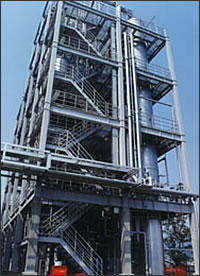
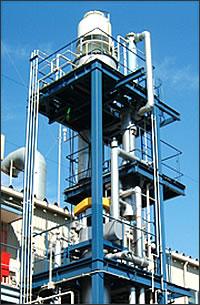
Methanol refinement systems, amyl alcohol refinement systems, ethanol refinement systems, hexanol distillation systems, propanol refinement systems, cyclohexanol distillation systems, isopropanol dehydration systems, ethylene glycol recovery systems, and butanol distillation systems.
FORE:Britain had seen her Continental Allies fall away one by one. The time was now approaching when some good allies might have been very useful to herself, if such people were ever to be found. We have seen that, during the American Revolution, the rebellious colonists found admirable allies in the Irish. They had no difficulty in exciting disturbances amongst that ardent Celtic race, and thus greatly to augment our difficulties. No sooner did the French commence the work of revolution than the Irish became transported with admiration of their doings. Not all the bloodshed and horrors of that wild drama could abate their delight in them, and their desire to invite them over to liberate Ireland, as they had liberated Belgium. These views found expression in the north of Ireland, especially in Belfast and other places, where the population was Presbyterian and to a certain extent Republican. The Roman Catholics were inert, and disposed to wait patiently. Ever since the American revolt the necessity of conciliating the Irish had been impressed on the British Government, and many important concessions had been granted them. They had not yet obtained Catholic emancipation, but the public mind was ripening for it, and the chief difficulty was the opposition of the extreme Protestant party in the Irish Parliament. Whatever were the evils which England had inflicted on Ireland, they were nothing compared with those which French fraternity would have perpetrated. But the United Irishmen, as the revolutionaries called themselves, could see nothing of this, not even after all the world had witnessed the French mode of liberating Belgium, and French waggons, guarded by soldiers, were day after day, and month after month, bearing over the Alps the priceless chefs-d'?uvre of the arts from ravaged Italy. In the spring of 1798 the preparations of the French Directory for the invasion of Ireland were too open and notorious to be overlooked by anybody.
Hexane distillation systems, tall oil distillation systems, benzene distillation systems, lubricating oil refinement systems, xylene-free distillation systems, low-boiling gas distillation systems, ethylbenzene recovery systems, fusel oil distillation systems, naphthalene distillation systems, propylene recovery systems, and turpentine oil distillation systems.
FORE:In the autumn the great Congress of Sovereigns assembled at Aix-la-Chapelle. We have already anticipated their chief object¡ªthe final evacuation of France by the Allied troops, and the settlement of compensations. They assembled about the middle of September, and remained together till the middle of November. Their business conferences, however, did not commence till the 30th of September. With regard to the evacuation of France, we need only state that it was greatly promoted by the exertions of the Duke of Wellington. Robert Owen was there to endeavour to enlist the Sovereigns in his schemes of social reform, but did not make any proselytes amongst the crowned heads, though the Czar Alexander told him he fully entered into his views, as he was generally accustomed to tell all reformers and religious professors, leaving them in the pleasing delusion that they had won him to their opinions. Clarkson was there to engage them to sanction the suppression of the slave trade, but with as indifferent a result. This was the closing scene of the great European drama, which opened with the French Revolution and terminated with the capture of Buonaparte. The Congress of Aix-la-Chapelle may be regarded as the recital of the epilogue.
Ether distillation systems, camphor distillation systems, epichlorohydrin distillation systems, aniline distillation systems, dioxane refinement systems, acetonitrile distillation systems, furfural refinement systems, formalin distillation systems, cyclohexane distillation systems, monoethanolamine rectification systems, polyglycol ether distillation systems, dimethylformamide recovery systems, acrylic glycol ether distillation systems, acrylonitrile refinement systems, acetone recovery systems, pyridine distillation systems, methyl ethyl ketone recovery systems, picoline distillation systems, methyl isobutyl ketone recovery systems, and acetaldehyde recovery systems.